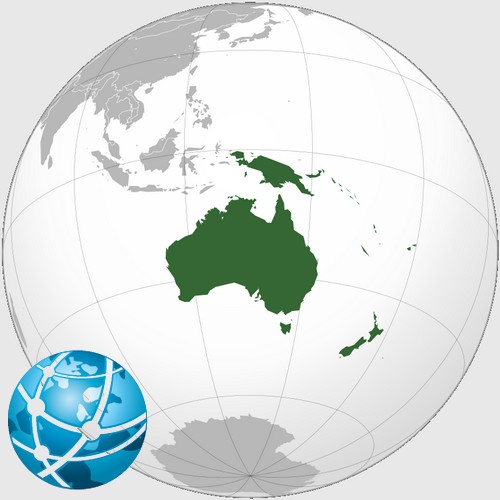
(Shenzhen, China) – Ke Mei Ou Lab Co., Ltd. (hereinafter referred to as "Ke Mei Ou Lab") has officially added two new radiofrequency electromagnetic field exposure assessment standards to its ISO/IEC 17025:2017 accreditation scope: Radiation Protection Series S‑1 (Rev. 1) and AS/NZS 2772.2:2016 (including Amendment 1:2018) . This expansion marks a further enhancement of the laboratory's capabilities in RF radiation safety testing, enabling full RF exposure compliance services for wireless communication equipment destined for the Australian and New Zealand markets.
Radiation Protection Series S‑1 (Rev. 1) , officially titled Radiation Protection Standard for Limiting Exposure to Radiofrequency Fields – 100 kHz to 300 GHz, was published by the Australian Radiation Protection and Nuclear Safety Agency (ARPANSA) and entered into force in February 2021. It replaces the previous RPS 3 standard (2002) and is among the first national standards worldwide to align with the 2020 ICNIRP (International Commission on Non‑Ionizing Radiation Protection) guidelines. Key features include:
Frequency range: 100 kHz to 300 GHz, covering conventional wireless communications to 5G millimeter waves.
Exposure limits: Two tiers – occupational and general public – set well below known harmful levels, intended to protect all individuals including different age groups and health conditions.
5G and emerging technologies: Additional requirements for frequencies above 6 GHz (e.g., 5G millimeter wave bands).
Compliance verification: Includes specific requirements for demonstrating compliance, along with assessment guidelines for mobile or portable transmitting devices.
Notably, the exposure limits of RPS S‑1 are built upon the ICNIRP 2020 guidelines, which are recognized by the World Health Organization as the leading international authority on non‑ionizing radiation protection. Australia is one of the first countries to align with ICNIRP 2020, making RPS S‑1 one of the most advanced RF exposure limit standards in the world.
AS/NZS 2772.2 is a joint Australian/New Zealand standard for measuring and calculating radiofrequency fields. The 2016 edition revises the 2011 version and incorporates Amendment 1:2018. It covers the frequency range 3 kHz to 300 GHz, with core elements including:
Compliance assessment framework: Requirements and guidelines for uating whether equipment meets the exposure limits of RF safety standards.
Measurement and calculation pathways: Two approaches (measurement or calculation) to assess human exposure to RF fields, including environmental RF exposure and induced body currents.
Wide equipment applicability: Applicable to broadcast facilities, cellular base stations, radio communication installations, radar systems, medical equipment (e.g., diathermy), industrial equipment (e.g., RF welders, heaters), and scientific research devices.
Uncertainty uation: Methods for assessing errors in measurement and calculation to ensure reliable results.
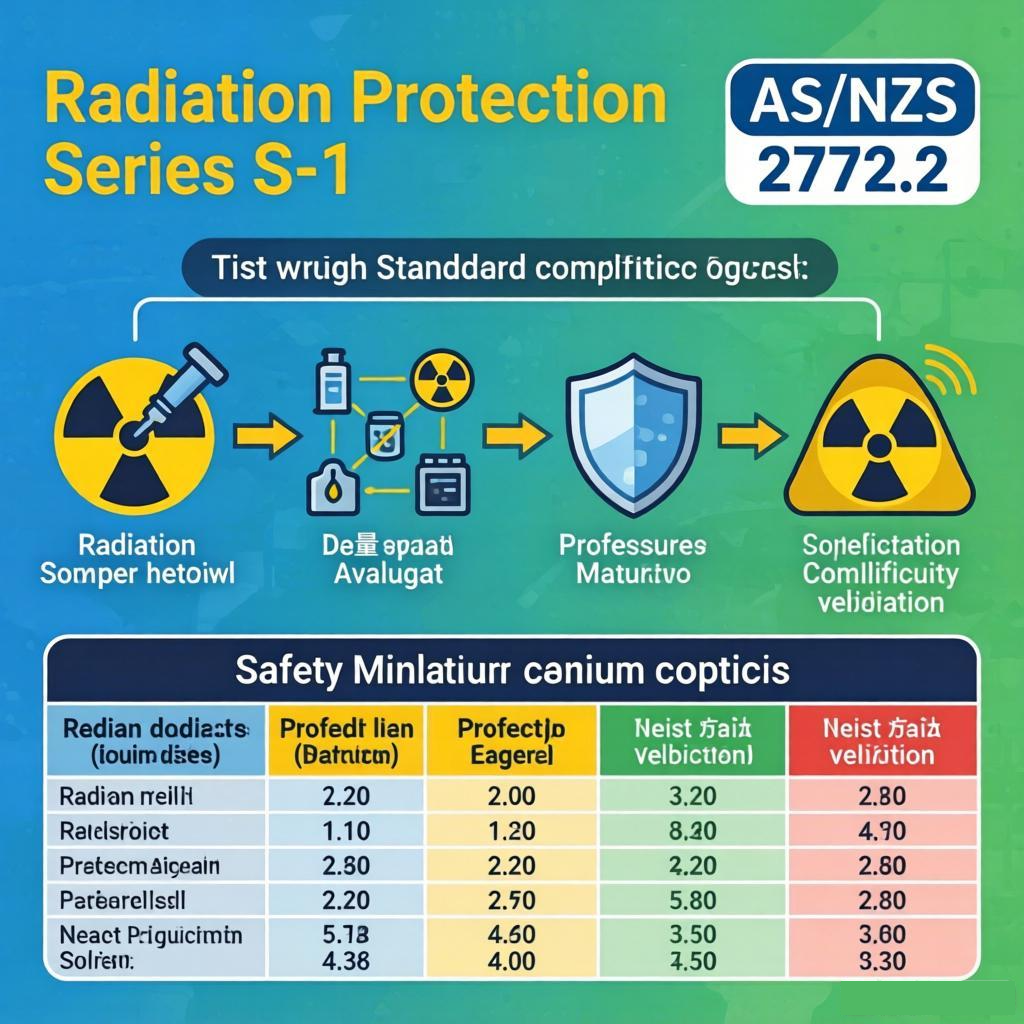
Together, RPS S‑1 and AS/NZS 2772.2 form a complete compliance package: RPS S‑1 defines “what are the safe limits”, while AS/NZS 2772.2 specifies “how to measure whether those limits are met” .
Under Australian regulatory framework, the ACMA (Australian Communications and Media Authority) explicitly references RPS S‑1 as the RF electromagnetic field exposure safety standard in Schedule 4 of the Radiocommunications Equipment (General) Rules, and cites AS/NZS 2772.2 as the standard for RF field measurement and calculation.
For RCM (Regulatory Compliance Mark) certification, wireless equipment requiring RF exposure assessment must use the measurement methods of AS/NZS 2772.2 to verify compliance with the exposure limits of RPS S‑1.
Thus, the two standards achieve a full‑chain compliance closure from limit setting to measurement validation.
1. Completing RCM certification testing capability
The RCM mark is Australia’s mandatory compliance mark for electrical safety, EMC, and wireless communications equipment, regulated by the ACMA. Wireless devices exported to the Australian market must satisfy ACMA’s RF standards, where RF exposure assessment follows AS/NZS 2772.2 and the safety limits must comply with RPS S‑1. This expansion enables Ke Mei Ou Lab to offer a complete RF radiation safety testing chain for wireless devices.
2. Serving 5G and high‑frequency equipment exports
RPS S‑1 includes special provisions for frequencies above 6 GHz, which is critical for compliance testing of 5G millimeter‑wave and other high‑frequency communication devices. Ke Mei Ou Lab’s RF testing capability covers 10 Hz to 325 GHz, matching RPS S‑1’s 100 kHz–300 GHz range, thus enabling accurate compliance assessment for 5G base stations, millimeter‑wave devices, etc.
3. Strengthening “one‑stop” export services for Chinese manufacturers
With the growing volume of Chinese‑manufactured wireless equipment exported to Australia and New Zealand, the demand for RF exposure compliance testing continues to rise. By incorporating RPS S‑1 and AS/NZS 2772.2 into its accredited scope, Ke Mei Ou Lab – already offering testing to major international standards (FCC USA, ISED Canada, EU, Japan, Malaysia, etc.) – now provides even more comprehensive “one‑stop” market access services for Chinese manufacturers.
For specific details and requirements, please contact our KMO! ->> kmo@kmolab.com
 Follow us for the latest news
 Working hours: 9:00-18:30, Monday to Friday
Contact:Lisa Liu
Mobile:18028790769
Email: kmo@kmolab.com
Address:Room 2013, 20th Floor, Business Center, Jiahui Xin Cheng, No 3027, Shen Nan Road, Fu Tian, Shen Zhen, Guang Dong, China